Born in Montreal, Province of Quebec, Canada, April 19th, 1961, Marc-André J. Fortier is the oldest sun of three children. His father was a Notary and mother a writer and drama teacher.
Studied at Bourget college in Rigaud and Jean-de-Brébeuf in Montreal, Quebec. Traveled to Central America in 1979 for two months. Lived in Canmore, Province of Alberta, from 1983-1985. Lived in Vancouver, Province of British Columbia, from 1986-1990.
Self taught Artist since 1986. Worked on the British Columbia Pavilion and Canada Pavilion murals in Vancouver, at the 1986 Universal Exposition. Won the "Bronze Palm Medaillon" and exhibited at the Biennale of Paris, Grand Palais des Champs-Élysées, Paris, France, in 1993.
Various solo and group shows in Art Galleries, Art Centres and Museums in Canada and United States since 1986.
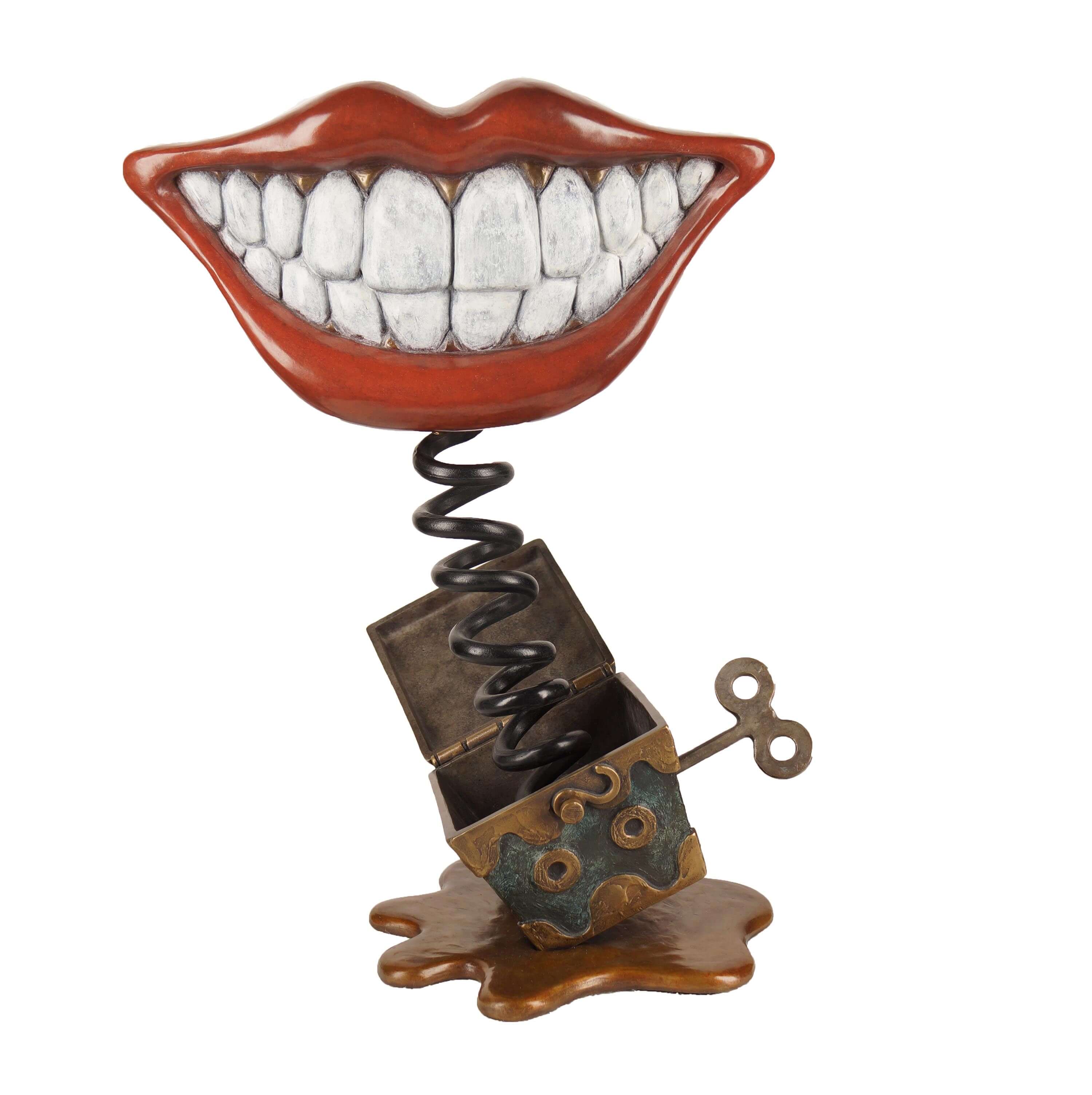
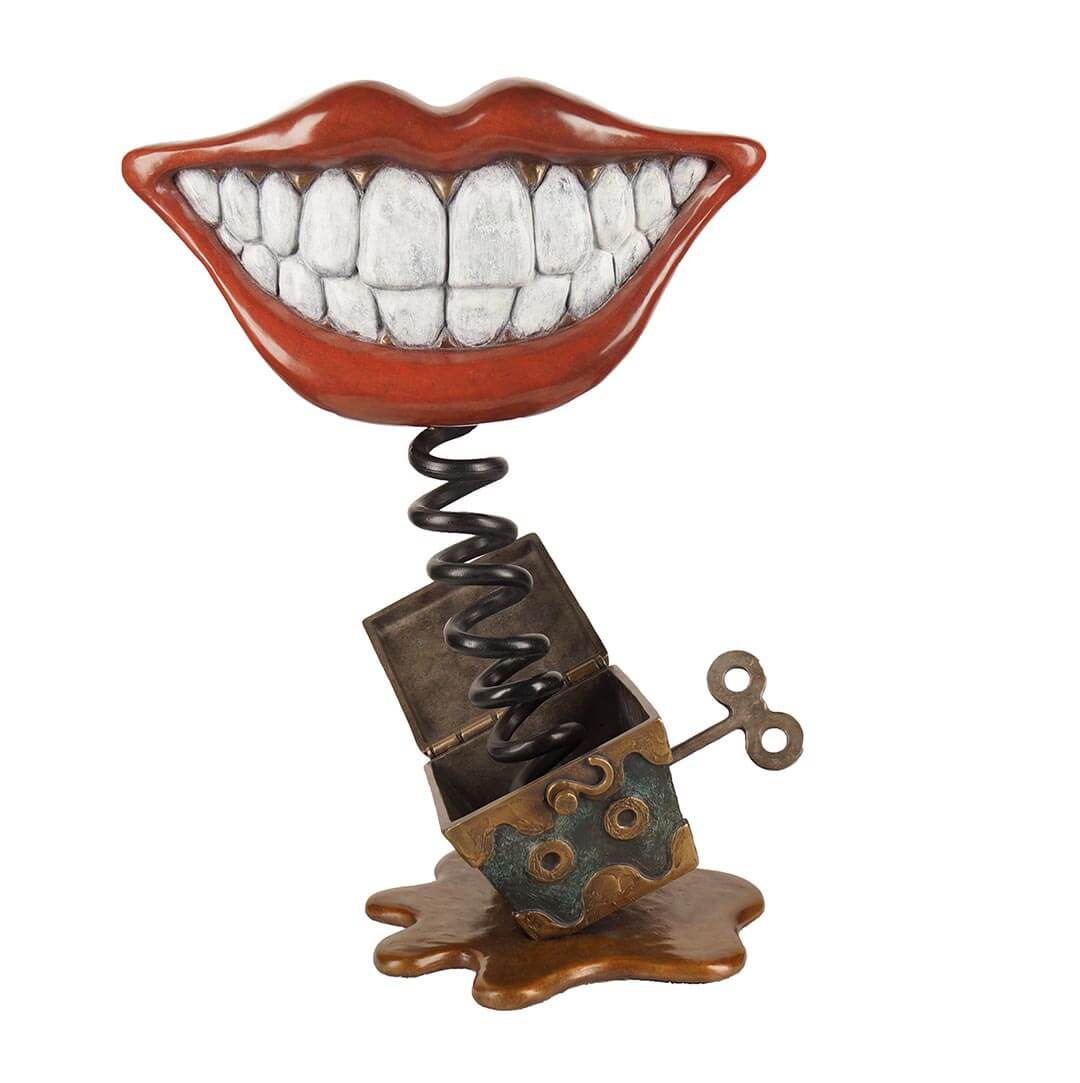
Faced with chaos, over-consumption and uncertainty within modern society, Marc A.J. Fortier questions the actors that we are with irony and occasional sarcasm. For him, all the elements of our world, be they living or inanimate, are animated by the same life and are confronted in an apparently irrational order: faces are human and robotic at the same time while objects are as much nanimate as they are animated. The paintings and sculptures of M.A.J. Fortier take place in the realm of reality and the mundane by affirming the durability and permanency of human attitudes: Snobbery and elitism, envy and pride, boredom, untruthfulness and solitude.
Our social and intellectual structure operates as though there were no place for such a statement. This statement was, however, the reason behind my initial attraction to Fortier's work. Not because he rattles or confronts our modern realities by installing the fear of regression to earlier states or different states, to say the least; rather, he trains our eyes onto these realities. His iconography, combined to a craft resting solely on knowledge and an exacting mastery of pictorial and sculptural techniques, seems to ignore the impact of the formal concepts which are the foundations of modern art, thus rendering this work even more suspicious.

Fortier's work is not limited to the matter alone: the support behind the work, being canvas, earth or wood, is also questioned. Marc A.J. Fortier dislocates the frame and the matter, taking it apart before making it his. He then rebuilds an asymmetrical frame for each painting, hence parting with the stability and apparent immuability of their support. Disassembling the frame only reinforces the ironic questioning of our attitudes by Marc A.J. Fortier's works, acting as a metaphor of reality. Nothing is so perfect as to escape distorsion and prevarication: the events in everyday life move to the rhythm of their actors and so does the support and the framework for them. Fortier's approach forces us to reflect on gestures, their presentation and their appearance.